
Low-cap cryptocurrencies under $150 million market cap consistently produce the highest upside in a bull cycle. They also produce the highest rate of total loss. The difference between the ones that survive and the ones that go to zero comes down to three things: whether the team can actually build, whether the product is solving a real problem people are willing to pay for, and whether the token economics are designed for sustainable growth rather than short-term extraction.
In April 2026, the strongest low-cap gems share a specific profile. They are operating in high-demand sectors like omnichain interoperability, decentralised GPU compute, real-world payment finance, DeFi liquidity infrastructure, high-speed user-friendly Layer-1s, and privacy infrastructure. They have transparent teams with verifiable track records or institutional backers who do due diligence. And they have on-chain activity that you can verify independently rather than just marketing metrics published by the teams themselves.
This guide does not cover memes or anonymous launches. Every project here has a public team, documented backers, or a proven technical delivery that gives you something to evaluate beyond narrative.
Why Low Caps in 2026 Specifically
The market cycle in 2026 is rewarding real utility and punishing pure speculation more aggressively than prior cycles. AI compute demand is creating genuine revenue for DePIN networks. Stablecoin-powered payment infrastructure is processing billions in real volume. DeFi protocols with actual fee revenue are trading at compressed multiples relative to that revenue. Privacy infrastructure is advancing from theoretical frameworks to audited production code.
All six projects in this guide have live products. None of them are pre-launch. That is the baseline standard for this list, and it is a higher bar than most low-cap gem lists set.
The common strengths across all six are credible teams or strong VC backing, live products with verifiable on-chain activity, token economics that tie value to actual usage rather than pure inflation, and market caps low enough that meaningful adoption growth would have an outsized price impact.
The common risks are also consistent: token unlock schedules that create known selling pressure, liquidity constraints that make entries and exits harder than on large caps, adoption dependencies that require external actors to change behaviour, and a competitive landscape where well-funded rivals are constantly closing the gap.
1. ZetaChain (ZETA) – Omnichain Infrastructure with an AI Layer
ZetaChain is a Layer-1 built for true omnichain interoperability. The distinction between ZetaChain and typical cross-chain bridges matters. Bridges wrap assets and create custodial risk at the bridge contract. ZetaChain enables native messaging and value transfer across Ethereum, Solana, Bitcoin, BNB Chain, Cosmos chains, and others without wrapping assets or requiring a trusted intermediary to hold funds. Developers build Universal Apps, single smart contracts that can read and write data across multiple chains simultaneously from one deployment.
In January 2026, ZetaChain 2.0 launched with a major upgrade: an AI interoperability layer that allows developers to build applications and agents that operate across AI models, preserve private user context, and monetise globally without custom backend infrastructure. The ZetaChain Lightning upgrades announced in June 2025 reduced block time from 6 to 4 seconds, with the research roadmap targeting approximately 2-second finality. The team has over 1 million followers on X and has demonstrated consistent product delivery since mainnet launch.
The team was founded by Ankur Nandwani, a former Coinbase team member, with additional talent from Google and ConsenSys. ZETA currently trades around $0.05 with a market cap in the $65 to $75 million range, well off its all-time high of $2.98. For a protocol that connects Bitcoin, Ethereum, Solana, and Cosmos in a single execution environment with a growing developer ecosystem, that market cap reflects significant pessimism that could reverse as developer adoption accelerates.
Risks include ongoing token unlocks that have historically suppressed price, competition from other interoperability protocols, and the need for ZetaChain 2.0’s AI features to demonstrate genuine developer traction rather than just narrative appeal.
2. io.net (IO) – Decentralised GPU Compute for the AI Economy
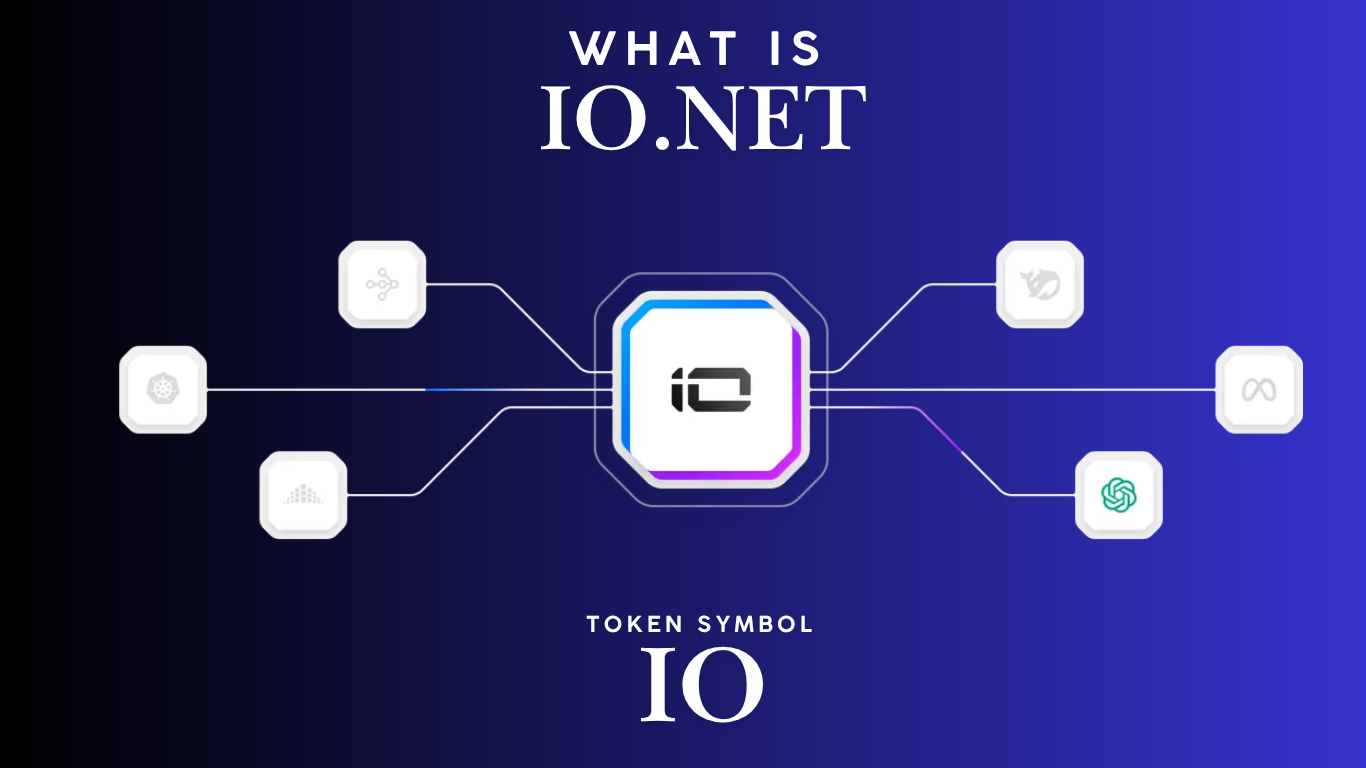
io.net aggregates underutilised GPUs from data centres, crypto miners, and independent hardware operators worldwide into instantly available clusters that AI developers can rent on demand, at up to 70 to 90% lower cost than centralised cloud providers like AWS or Google Cloud. The network spans 130 or more countries, has processed over $20 million in verifiable compute leases, and recently hit all-time highs in AI training utilisation.
The Incentive Dynamic Engine, rolling out in Q2 2026, replaces the previous fixed-emission tokenomics with a demand-driven model that stabilises GPU supplier payouts in USD terms and burns at least 50% of remaining revenue after supplier costs. This transition from inflationary bootstrapping to revenue-tied economics is the key story for IO holders. Agent Cloud, launched in March 2026, specifically targets autonomous AI agents that need to provision and manage compute without human intervention or KYC requirements.
Backers include Anatoly Yakovenko of Solana Labs, the co-founders of Aptos Labs, Yat Siu of Animoca Brands, Solana Ventures, OKX Ventures, and Hack VC. Market cap sits around $35 to $40 million. For a network generating $20 million-plus in annualised compute revenue with this quality of backing, that valuation gap is the central thesis.
Risks include token unlock schedules that create supply headwinds, competition from Render and Akash in the DePIN compute space, and the execution dependency on the IDE tokenomics rollout performing as the stress tests modelled.
3. Huma Finance (HUMA) – Real-World PayFi Liquidity
Huma Finance is the leading PayFi protocol, which means it finances real-world payment flows on-chain. Businesses tokenize invoices, trade receivables, or payment streams and receive stablecoins immediately. Liquidity providers fund those positions and earn USDC yield from actual transaction fees. By February 2026, Huma had processed over $10 billion in cumulative transaction volume. That is not TVL. That is completed payment financing on real commercial transactions.
The product lineup includes Huma 2.0 on Solana for permissionless liquidity provision, Huma Institutional for accredited investors seeking curated real-world asset opportunities, and Huma Prime for leveraged yield strategies with automated risk management through what the protocol calls Defensive Looping. Partnerships include Circle, Obligate for commodity trade finance across Asia, Africa, and Latin America, Tala for a $50 million facility backing lending to 13 million underbanked users, and multiple cross-border payment rails.
The team has fintech execution roots through Richard Liu, whose background spans Google and EarnIn. Backers include Circle Ventures, Solana Ventures, Galaxy Digital, HashKey Capital, and ParaFi Capital. Market cap is around $35 to $44 million depending on the day. Classic Mode on Huma 2.0 offers roughly 8% APY in USDC, backed by real payment activity rather than token emissions.
Risks include ongoing token unlocks as the circulating supply expands from roughly 29% toward full supply, adoption dependencies on traditional businesses moving payment financing on-chain, and regulatory friction in payments and RWA jurisdictions.
4. Fluid (FLUID) – Capital Efficiency Redefined for DeFi
Fluid, formerly Instadapp, is not just another DeFi protocol. It built a shared Liquidity Layer where lending, borrowing through vaults, and DEX trading all draw from the same pool of capital. The result is a protocol where the same dollar is doing multiple jobs simultaneously. Smart Collateral lets users post LP tokens as collateral while those positions continue earning trading fees. Smart Debt deploys borrowed funds as DEX liquidity, generating fees that offset interest costs. The compound effect is that Fluid generates more revenue per dollar of TVL than any other lending protocol in DeFi.
In 2025, Fluid’s DEX became the second-largest on Ethereum by trading volume, processing $156 billion over the year. By end of 2025, active loans hit $2.17 billion. Annualised revenue exceeds $15 million. In October 2025, the protocol initiated the Fluid Reserve, directing 100% of Ethereum mainnet revenue toward on-chain FLUID buybacks. DEX v2, audited and launched in early 2026, introduces dynamic fees, oracle buffer zones, and customizable LP ranges to significantly reduce losses for liquidity providers in volatile markets.
The Aave DAO purchased $4 million of FLUID at a valuation implying around $350 million FDV, which is the most concrete institutional validation signal available for a DeFi governance token. Market cap has pulled back considerably from that valuation, creating a compressed price-to-fees ratio that fundamental DeFi analysis finds interesting. Fluid is at the higher end of this list at $130 to $170 million market cap, but still reasonable given the revenue and volume metrics.
Risks are DeFi-specific: competition from Aave, Morpho, and new entrants, the composability risk demonstrated by the March 2025 Resolv Protocol incident (which Fluid fully repaid by March 2026), and governance debates around the Fluid Foundation’s $250,000 monthly operational cost.
5. REI Network (REI) – Gas-Free EVM Layer-1 for Mass Adoption
REI Network is a lightweight, EVM-compatible Layer-1 that removes gas fees for end users by design rather than as a marketing subsidy. The mechanism works through staking: users stake REI tokens to earn on-chain resource credits, and applications can stake on behalf of their users so that end users never encounter a gas prompt. For gaming, social dApps, micro-payment applications, and AI agent coordination, this is the friction removal that makes consumer blockchain applications viable.
The chain runs at 3-second average block times with 3,000-plus TPS through a DPoS plus BFT consensus mechanism, with the 2026 roadmap targeting 1.5-second block production on mainnet. The team comes from GXChain, a public blockchain project operating since 2017, which provides execution history that most small-cap L1 projects lack. The BSC cross-chain bridge went live in November 2025 and partnerships with Bluwhale, Inference Labs for zkML, and Adventure Layer for gaming extend the technical roadmap.
The Binance delisting in December 2025 is the main bearish data point to acknowledge honestly. Exchange access affects liquidity, and reduced coverage makes entries and exits harder. The market cap sits in the $2.5 to $3 million range, one of the smallest credible L1 plays available.
Risks include the liquidity and volatility consequences of that market cap, the Binance delisting headwind, and the need for genuine ecosystem growth to justify the infrastructure investment the team is making.
6. Aleph Zero (AZERO) – Modular ZK Privacy as Infrastructure
Aleph Zero is a Layer-1 built on a peer-reviewed, academically verified consensus protocol called AlephBFT, achieving sub-second finality through a network of approximately 170 validators. The privacy infrastructure is built around zkOS, which powers sub-second ZK proof generation on consumer hardware including standard laptops and mobile devices. The Shielder, audited by ZK Security, is the core privacy primitive: a shielded pool contract where users can privately transfer assets without linking transactions to their identity. The Shielder SDK allows any developer to integrate this into wallets and dApps.
The academic credibility here is genuine. Co-founder Adam Gagol holds a PhD in mathematics. The core development arm, Cardinal Cryptography, collaborated with Nethermind, which has worked for the Ethereum Foundation and StarkWare, on the architecture of Liminal, the multichain privacy layer. In 2025, zkOS powered a cross-chain private identity verification system through an integration with idOS, allowing users to prove compliance requirements without exposing underlying personal data. This is the kind of infrastructure regulated DeFi needs to onboard institutional capital without creating on-chain KYC databases.
Market cap is extremely low at roughly $1.3 to $1.9 million. That low valuation reflects real concerns: the EVM L2 was sunset in August 2025 as a strategic consolidation, developer adoption is limited, and liquidity is thin enough to make any meaningful position difficult to exit in stress scenarios.
Risks are significant. Inflationary supply with a yearly emission of 30 million AZERO and no confirmed burn mechanism creates constant selling pressure. The undisclosed activities from May 2025 referenced by the team remain unresolved in public communications. Competition in ZK privacy from Aztec, Mina, and Ethereum privacy layers is intense. This is the highest-risk entry on the list.
Comparing the Six Across Key Dimensions
If you line these up against the criteria that matter for low-cap gem selection, the picture looks like this:
ZetaChain and Fluid have the strongest product-market fit evidence in their respective categories. ZetaChain solves a real developer problem around omnichain deployment. Fluid has generated $156 billion in DEX volume and $15 million in annualised revenue.
io.net and Huma have the clearest revenue-to-market-cap thesis. Both have real paying customers. io.net’s compute leases are verifiable on-chain. Huma’s $10 billion in transaction volume is tracked independently.
REI Network and Aleph Zero are the highest-risk, highest-upside positions. REI has execution history from GXChain and a clear friction-removal thesis. Aleph Zero has genuine cryptographic innovation and academic credibility. Both are at market caps where even modest adoption growth would produce outsized returns, and where thin liquidity could make those returns difficult to realise.
Key Risks Across the Board
Token unlock schedules are the most immediate structural risk for every project on this list. Always check Tokenomist or the project’s official vesting documentation before sizing a position.
Liquidity and volatility at these market caps mean that position sizing matters more than it does on large caps. Entry and exit conditions should be planned before you buy, not after.
Real adoption versus reported metrics is always a due diligence question. TVL can be manipulated through incentives. Transaction volume can be wash-traded. The cleanest signal is fee revenue from external payers who are not token holders.
Regulatory development in DeFi, payments, AI compute, and privacy sectors will affect all six projects in ways that are genuinely hard to predict.
Getting Started Safely
Start with full documentation review before committing any capital. Check each project’s official site, docs, and most recent on-chain metrics via DefiLlama, CoinGecko, or the network’s own explorer. Verify current token unlock schedules on Tokenomist. Start with small positions across multiple sectors rather than concentrating in one project. Stake or provide liquidity only after understanding the specific mechanics and risks of each protocol.
These six projects represent serious attempts to solve real problems. The teams are identifiable, the products are live, and the on-chain activity is verifiable. Whether any of them deliver the upside the market caps imply is possible depends on sustained execution against genuinely hard technical and adoption challenges. Do your own research and only use capital you can afford to lose completely.
This article is for educational purposes only and does not constitute financial advice. Cryptocurrencies are highly volatile and many low-cap projects fail entirely. Always conduct your own thorough research before making any investment decisions.
